1.2.1

Difficult/Dissonant Heritage and architectural design

Faculty

Module Type

Elective

Credits

6

Hours

3/week

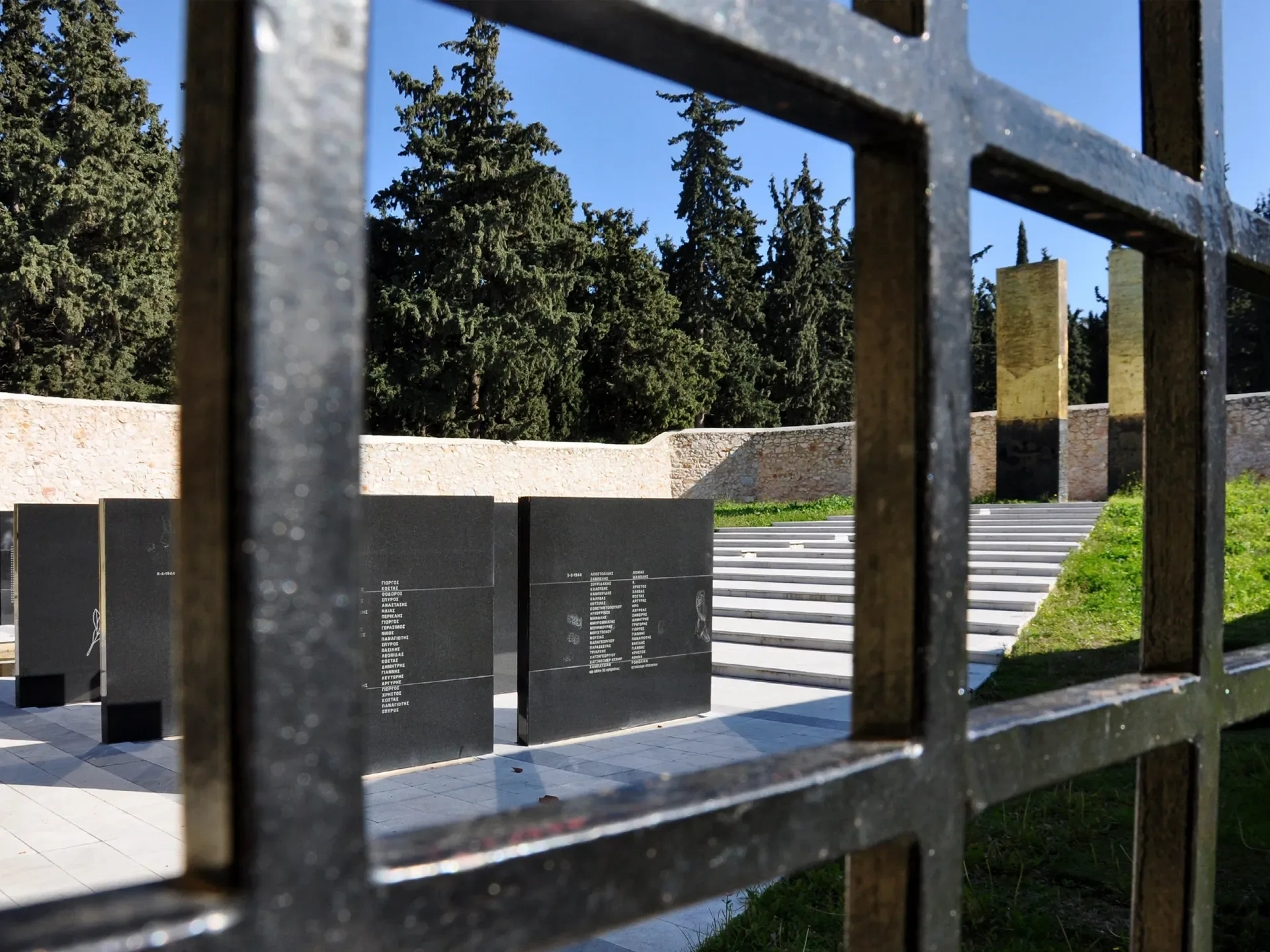
The term ‘difficult heritage’ is used to describe a past that is recognised as important for the present but that is also ambivalent, awkward, or does not easily fuel national or other self-confirmation. Instead of pride, it encourages reflection, memory, social reconciliation, self-criticism, honouring the victims. Concentration camps, sites of torture, refugee housing, monuments of ‘Others’, and abandoned settlements are some typical examples of such sites. What is the position and function of such sites in the contemporary urban and rural landscape? How do they constitute objects of spatial and architectural design? This module will examine a series of international examples of Difficult Heritage and the role that architectural design played or can play in the handling of memory. During the module, important theoretical and design-related issues will be addressed, such as the preservation of evidence, the educational function of the site, the role of new technologies and digital humanities. Moreover, we will discuss the dangers of aestheticization of violence, commodification of memory, loss of information, lack of inclusivity and politicisation of the narrative.

1.2.2

Landscapes of Modern Greece: Places, Stories, Architectures

Faculty

Module Type

Elective

Credits

6

Hours

3/week

Even in its most international and radical forms, modern Greek architecture sought to connect with its place. The geomorphology, nature, history, myth, and ‘genius’ of each place influenced architecture in a decisive way. Through various revivals, revisions, and reconceptualisations, modern ideals were superimposed on existing cultural forms, adding new layers to those of past times.

The module explores how specific cultural landscapes shaped the identity of modern architecture in Greece, positioning it within the liminal space between myth and history, utopia and reality, modernity and tradition. Through examining specific case studies, the module will explore the cultural and aesthetic identities of places such as Athens, Delphi, Elefsina and Delos, and their influence on architects’ work in Greece and beyond. Students will use texts, sketches, drawings, photographs, and other materials produced by architects, artists and other intellectuals as an open repository of ideas and forms, using them to produce their own narratives in the form of short fiction or visual essays. Ultimately, the critical documentation of places and their histories and the production of contextual archives, will lead to novel interpretations and creative compositions.

1.2.3

A Methodology of Compound Approach: Cultural Landscapes and their Design Schematization

Faculty

Module Type

Elective

Credits

6

Hours

3/week

A didactic methodology concerning landscape formation must consider, at least, two important approaches. The first approach must refer to the landscape’s cultural validity, which is crucial for the formation of human communities. It must discuss how the landscape has shaped the social identities of these communities, how their history has emerged from their natural surroundings, and how the environment is changing accordingly. Moreover, a concise didactic methodology concerning landscape formation must also refer to a second approach regarding the design of landscapes, one that considers the possibility of expressive, representational, and semantic interventions in them. It is within this context that the proposed module will present the relation between landscape design and other design practices, especially architectural and urban design, in Euclidean or topological terms. The module will intensively refer to the concept of abstract ‘schematization’ applied to both natural and human-made design elements, a concept crucial for neoteric, modern, and contemporary theory of knowledge. It is important to comment, in addition, that abstract design schemes applied in landscape design in every historical period possess cultural and, in many ways, political value. They are correlated with the approval or the rejection of the degree of human control exerted on nature. They are thus correlated with cultural and, in many ways, political intentions concerning social and ecological conscience. The module will insist on non-conventional exercise approaches, on original essays of creative texts, with the addition of supportive sketches, drawings, or elementary models.

2.2.1

The where and how of cultural heritage: Heritage and Locus as the focus of research by design

Faculty

Module Type

Elective

Credits

6

Hours

3/week

The module focuses on the concept of the cultural landscape as a subject of research-by-design. Its primary objective is twofold: firstly, to familiarize students with the concepts and analytic tools of locus, landscape, continuum, and network, in relation to site, diagram, and program within architectural research; and secondly, to cultivate the capacity to apply these tools effectively in selected case studies. Moreover, the module aims to demonstrate the importance of analysing both the tangible and intangible dimensions of cultural landscapes and the historic buildings they encompass, as well as the often-conflicting values embedded within them. Finally, it seeks to develop students’ ability to employ in situ research methodologies and contemporary instruments relevant to research-by-design approaches. The module examines the natural and human-made environment of the cultural landscape, focusing on the concepts of locality (locus) and its associated cultural background, understood as two central notions for heritage management. The module material focuses on the concepts and analytical tools of place, landscape, continuum, and network, in relation to the site, diagram, and program within architectural research. These concepts and tools are explored and applied through a targeted selection of case studies. Subsequently, the module shifts its focus to the transition from the landscape-scale to the building-scale, examining their interrelation and developing methodologies for analysing and evaluating their respective dimensions. Finally, methodologies for the management of in situ research on built works, along with contemporary tools for research-by-design, are elaborated and applied as part of the module exercise. Students are encouraged to develop a personal approach of expression through their own selection of media that articulate the language of space.

2.2.2

Mediation and Presentation of Cultural Heritage

Faculty

Module Type

Elective

Credits

6

Hours

2/week

The module examines how cultural heritage is interpreted, mediated and publicly presented across a range of contexts, including archaeological sites, museums, urban environments and digital platforms. It introduces key theoretical approaches to representation, authenticity and narrative construction and explores how this shape the ways in which tangible, intangible and digital heritage are understood by different audiences.​ Emphasis is placed on the relationship between scholarly interpretation, curatorial practice and communicative strategies, highlighting how decisions in design, text production and media use influence public engagement with the past. Through the discussion of national and international case studies, students develop an awareness of the social, political and aesthetic dimensions of heritage mediation and learn to critically assess existing forms of presentation.​

A central component of the module is a teaching week in Athens, which provides direct engagement with the city’s multilayered historical landscape. During this practical phase, students analyse diverse heritage sites, reflect on questions of visibility and absence in the urban fabric and experiment with approaches to communicating complex historical narratives to specialist and nonspecialist audiences. The combination of theoretical grounding and practical investigation supports the development of reflective, creative and contextsensitive strategies for the presentation of cultural heritage.